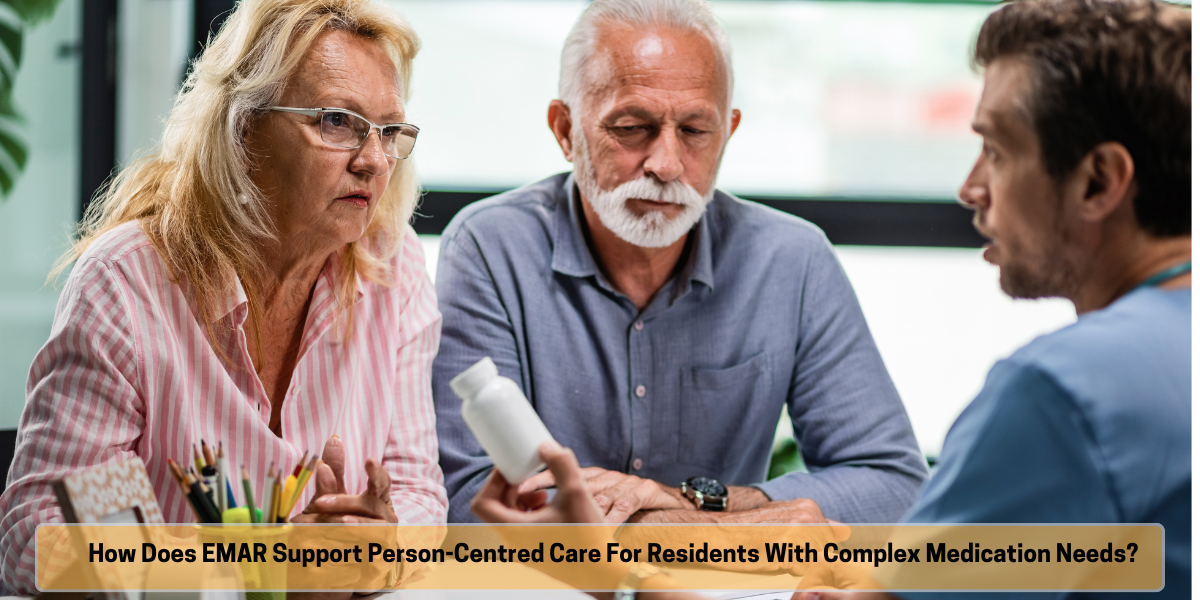
Residents with complex medication needs more than routine medicine rounds. Many take several medicines at different times, need dose changes, or have conditions such as dementia, diabetes, epilepsy, or poor kidney function. In these cases, person-centred care is essential because it treats the resident as an individual, not as a task on a list. Staff must know the person’s diagnosis, allergies, preferences, communication needs, daily routine, and response to treatment. This approach improves safety, dignity, trust, and comfort. It also helps staff make better decisions when a resident refuses a dose, shows side effects, or needs a medicine at a specific time to keep symptoms under control.
| Why it matters | Effect on residents |
| Individual needs guide care | Better comfort, dignity, and trust |
| Care reflects routine and preferences | More cooperation with medicines |
| Staff know history and risks | Fewer avoidable errors and harm |
Complex medication needs can take several forms. A resident may take many medicines at once, which raises the risk of interactions, duplication, and confusion. Another resident may need “when required” medicines, variable doses, anticoagulants, insulin, pain relief, thickened fluids, or medicines in crushed or liquid form. Some need close observation after administration because side effects can appear quickly. Others move between hospital, GP, pharmacy, and care home, which can lead to late updates or conflicting records. In these situations, mistakes can include the wrong dose, missed doses, early or late administration, duplicate doses, failure to record refusal, or failure to notice allergies and contraindications. These errors can lead to falls, seizures, pain, hospital admission, or loss of confidence in care.
| Type of need | Risk if care is poor |
| Polypharmacy | Interactions, duplication, omission |
| Time-critical medicines | Symptom flare, loss of control |
| Variable or high-risk doses | Serious harm from dose error |
| Transitions between services | Outdated records and confusion |
When person-centred care is absent, medicine support can become routine, rushed, and unsafe. Staff may focus only on task completion and ignore the resident’s voice, capacity, consent, or usual habits. A resident with dementia may refuse a tablet because of fear or confusion, yet the real issue may be timing, form, or poor explanation. A resident with swallowing problems may receive a medicine in a form that causes distress or risk. A resident with pain may look agitated, but staff may misread the behaviour and miss the need for relief. Poor communication can also reduce family trust and increase complaints. In the long term, lack of person-centred care can cause poor adherence, worsening health, avoidable incidents, and a weaker quality of life.
| When person-centred care is absent | Likely outcome |
| Resident preferences are ignored | Refusal, distress, low trust |
| Communication is poor | Consent issues and confusion |
| Symptoms and side effects are missed | Harm, hospital admission |
| Care becomes task-led | Lower quality of life |
eMAR supports person-centred care because it gives staff clear, current, and accessible medication information at the point of care. It can show the right medicine, dose, time, route, allergies, and special instructions for each resident. Alerts can flag missed doses, duplicate administration, or medicines that need extra caution. Real-time records help staff see what happened, when it happened, and who gave the dose. This audit trail strengthens accountability and supports safer handovers. eMAR also helps teams update records quickly after GP reviews, hospital discharge, or pharmacy changes. Most importantly, it gives staff a fuller picture of the resident’s medication plan, so care can match the person’s clinical needs as well as their daily routine, comfort, and choices.
| How eMAR helps | Benefit for person-centred care |
| Clear medication records | Safer and more accurate administration |
| Alerts and prompts | Fewer omissions and duplicate doses |
| Fast updates after changes | Better continuity of care |
| Audit trail and shared access | Stronger teamwork and accountability |
eMAR supports person-centred care by helping staff give the right medicine to the right resident at the right time, with full awareness of that person’s individual needs. For residents with complex medication needs, this link between safe systems and personalised care is vital.