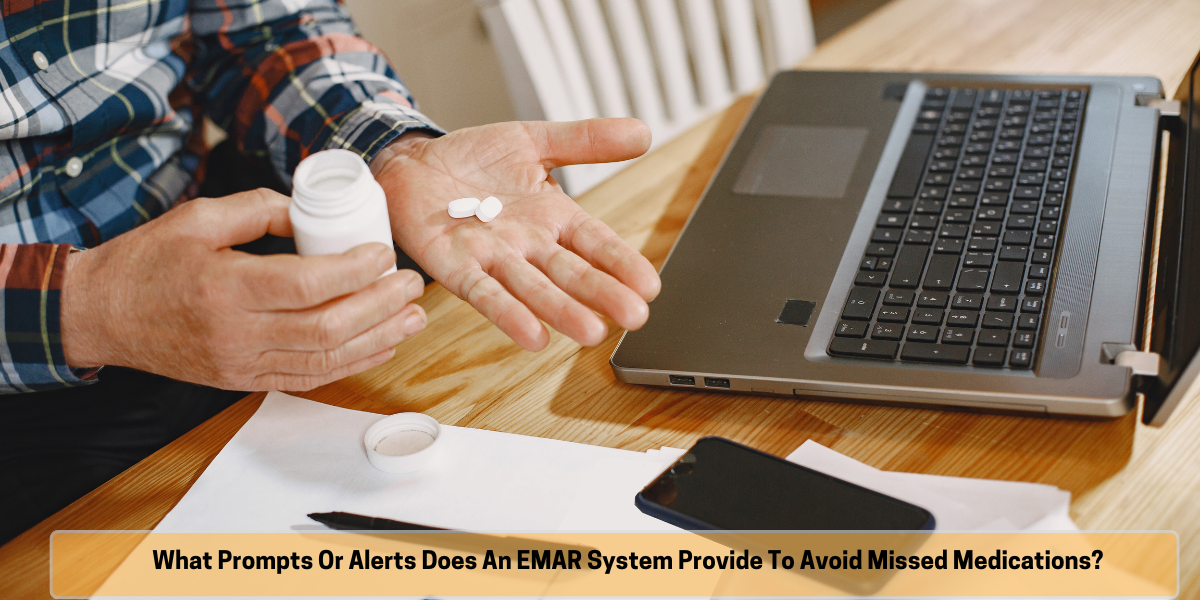
Missed medications are one of the most common medication safety issues in care homes, hospitals, and other healthcare settings. A missed dose may look like a small error, but it can have serious effects, especially for older adults, people with long-term conditions, and patients who depend on time-sensitive medicines. For instance, a missed antibiotic dose may slow recovery. A missed insulin dose may affect blood sugar. A missed heart, epilepsy, pain, or blood-thinner medicine may place the patient at risk of serious harm. This is why medication routines must be accurate, timely, and easy for care staff to follow.
An electronic medication administration record system, also called eMAR, helps reduce missed medications through prompts, alerts, reminders, and real-time records. It gives staff clear visibility of what is due, what is overdue, and what action still needs attention.
Why Do Missed Medications Happen?
Missed medications often happen because care settings are busy and unpredictable. Staff may have several residents or patients to support at the same time. A medicine round may face delays due to urgent care needs, resident refusal, staff handover, stock issues, or unclear records.
Common causes include:
| Cause | How It Leads to Missed Medication |
| Busy shifts | Staff may lose track of medicine times. |
| Paper chart errors | Handwritten records can be unclear or incomplete. |
| Poor handover | The next shift may not know a dose is still due. |
| Medicine not in stock | Staff cannot give a dose if the medicine is unavailable. |
| Resident refusal | Staff may forget to return later or document the refusal. |
| Interruptions | Calls, emergencies, and care tasks can disrupt medicine rounds. |
| Lack of system knowledge | Staff may not understand alerts or chart symbols. |
This is where eMAR systems add value. They reduce reliance on memory and give staff a structured process to follow.
Key eMAR Prompts and Alerts That Help Prevent Missed Doses
1. Medication Due Alerts
A medication due alert reminds staff that a dose is scheduled. The system may show the resident’s name, medicine, dose, route, and due time.
These alerts help staff:
- See which medicines are due now
- Plan the medicine round
- Prioritise time-sensitive medicines
- Reduce the chance of human forgetfulness
Many eMAR systems use colour codes. For example, green may mean “due soon,” amber may mean “due now,” and red may mean “overdue.” This visual design helps staff act fast.
2. Overdue or Missed Dose Alerts
If a medicine is not marked as given within the allowed time window, the system creates an overdue alert. This is one of the most important safety features in an eMAR system.
The alert may show:
- Patient or resident name
- Medicine name
- Scheduled time
- Time delay
- Required action
- Staff member assigned to the round
Some systems can also escalate the alert to a senior nurse, manager, or clinical lead. This means a missed dose does not remain hidden in the chart.
3. Real-time Documentation Prompts
After staff give a medicine, the eMAR system prompts them to record the outcome straight away. They may need to select one of several options, such as:
- Given
- Refused
- Withheld
- Not available
- Delayed
- Requires review
This protects the patient and the staff member. It also prevents confusion. If a dose has not been documented, another staff member may not know whether the medicine was actually given.
4. Dose and Route Verification Alerts
eMAR systems also help staff check the right dose, right route, right time, right medicine, and right patient.
For example, the system may alert staff if:
- The dose entered does not match the prescription
- The medicine is due by a different route
- A dose is attempted too early
- A medicine requires a second check
- The medicine is high risk
5. Allergy and Interaction Alerts
An eMAR system can alert staff if a medicine may cause harm due to allergy, interaction, or contraindication.
For example:
| Alert Type | Example |
| Allergy alert | Patient has a recorded penicillin allergy. |
| Interaction alert | Two medicines may react badly together. |
| Contraindication alert | A medicine may not suit the patient’s condition. |
| Duplicate therapy alert | Two similar medicines may have been prescribed. |
These alerts help staff stop and review before the medicine reaches the patient.
6. Stock, Expiry, and Reorder Alerts
A dose may be missed if the medicine is out of stock. eMAR systems can reduce this risk through stock alerts.
These alerts may tell staff:
- A medicine supply is low
- A reorder is needed
- A medicine has expired
- A controlled drug count needs review
- A pharmacy request is pending
This is especially important in care homes, where stock delays can affect several residents.
7. Shift Handover Alerts
Medication errors often happen at shift change. An eMAR system can create a clear handover view that shows:
- Medicines still due
- Overdue doses
- Refused medicines
- Delayed doses
- Stock issues
- Notes for follow-up
This helps the next team continue care without gaps. It also supports accountability because pending medication tasks are visible.
How eMAR Chart Training Helps Staff Understand Alerts
An eMAR system is only effective when staff know how to use it correctly. This is why eMAR chart training is essential.
Training should teach staff how to:
- Read due and overdue alerts
- Record refused or delayed doses
- Respond to allergy warnings
- Check dose instructions
- Escalate missed doses
- Use handover notes
- Avoid alert fatigue
- Understand colour codes and symbols
Good training also helps staff understand which alerts need immediate action and which alerts need clinical advice. Without proper training, staff may click past warnings too quickly or record the wrong outcome.
Quick Checklist for Care Staff
Before, during, and after each medicine round, staff should check:
- Are all due medicines visible on the eMAR chart?
- Are any medicines overdue?
- Are there allergy or interaction alerts?
- Is the dose, route, and time correct?
- Is the medicine available and in date?
- Has the patient refused any dose?
- Has every outcome been documented?
- Are any issues passed to the next shift?
Missed medications can harm patients, delay recovery, and reduce trust in care. eMAR systems help prevent this by giving staff timely alerts, clear prompts, and accurate medication records.